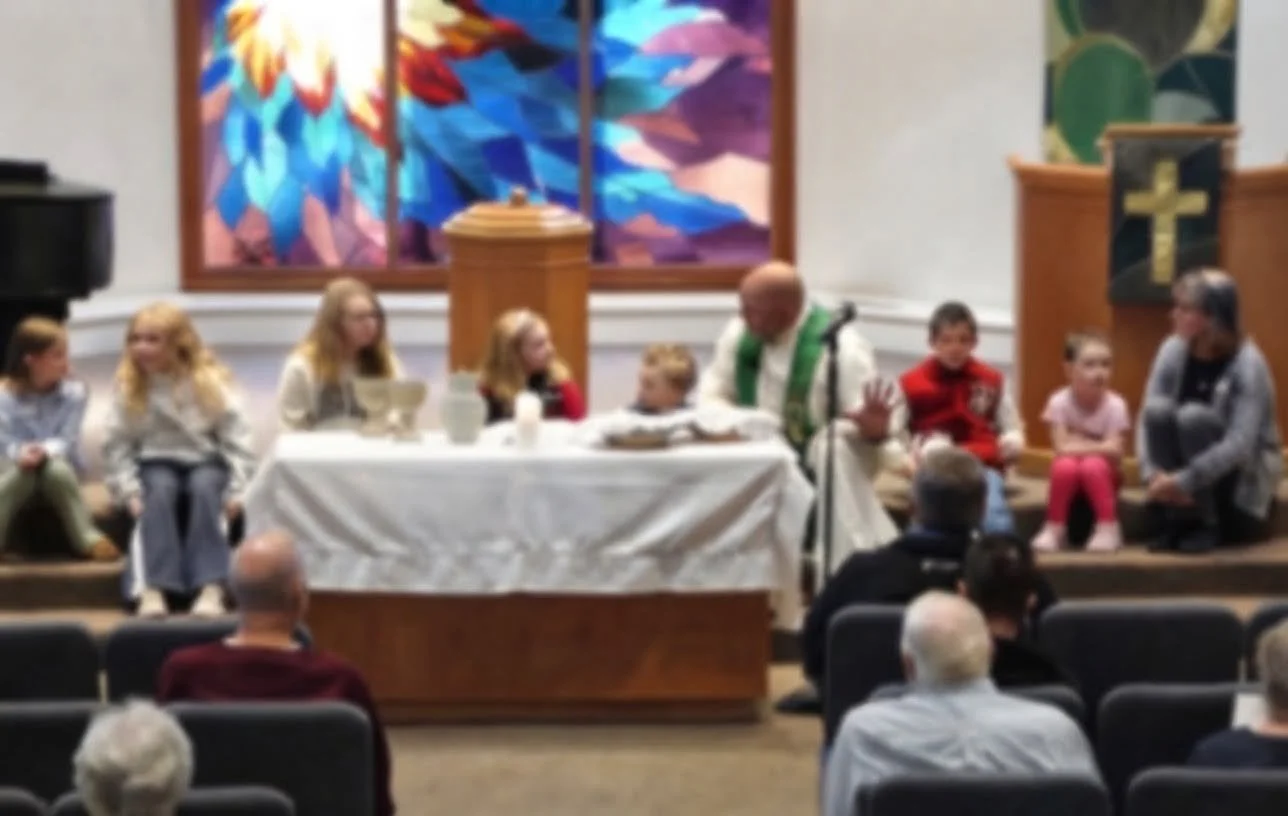
This is a reflection, a beginning of a conversation, I shared with
the congregation I lead as pastor, the Presbyterian United Church of Christ in Saratoga Springs, NY,
on our engagement with children, youth, and families.
Solidarity and inclusion shape the life of this congregation. They guide how we worship, share fellowship, bear witness, and serve. Nowhere are they more essential than in how we welcome our children and their families. To follow Jesus is to stay intentionally connected to the challenges, opportunities, blessings, and work of a wider community of love and justice, and how we make room for children and youth is a good (and perpetual) test of that intention.
The "Faith Moment with the Children" is where we practice this as a community every Sunday. It is a physical moment during our service of worship where children are invited, and we hope expected, to be fully who they are. It is also a place where the whole congregation practices solidarity and inclusion, staying open to being taught by children and youth what the kingdom of heaven come near looks like. This comes straight from Jesus, who told us to let the little children come and not hinder them (Matthew 19:14), and that unless we turn and become like children, we will never enter the kingdom (Matthew 18:3). The children are not a warm-up to the real worship. They are among our teachers.
Presbyterians and Congregationalists affirm that children are full members of the Church. Baptism is not a rite of passage. It is a declaration that children receive the grace of Jesus fully and belong fully to the community that seeks to follow him. The PC(USA) Book of Order says it plainly: the baptism of children "witnesses to the truth that God's love claims people before they are able to respond in faith" (G-1.0301). The UCC Manual on the Local Church likewise describes baptism as the beginning of a person's Christian journey and entry into the universal Church. If that is what we believe, then the Church owes children safety, learning, and above all belonging, the kind of nurture Proverbs 22:6 has in mind when it speaks of training up a child.
We are also living into this commitment through Sunday morning faith education, led by Ms. Trish and a team of dedicated volunteers, including many of our youth. Ms. Corinne and several leaders are also in active conversation about this gift to our children and testimony to what a community can do when people give their time and their hearts. But it is only one way, and we are invited to imagine many more. We will need to open space in our schedule and our building, and set aside financial and personnel resources so that our engagement with young people and their families can keep growing. "It takes a village" is not a cliché. It is how a church comes alongside parents and guardians so they have what they need to raise their children.
As we grow, we are asked to look ahead rather than back. The question is not what worked in youth groups past or Sunday schools of yonder, but what is true for children and youth in this season. That means embracing their self-determination of identity. It means welcoming different ways of learning, engaging, and behaving in public, and making sure that every child, young person, and family finds safety and belonging here. Our hope is not to shape young people in the likeness of adults or of our traditions, but to help them grow into the full image and likeness of the Divine, already breathing and beating strong in their spirits.