
Welcoming the Stranger:
Faith, Solidarity, and Community
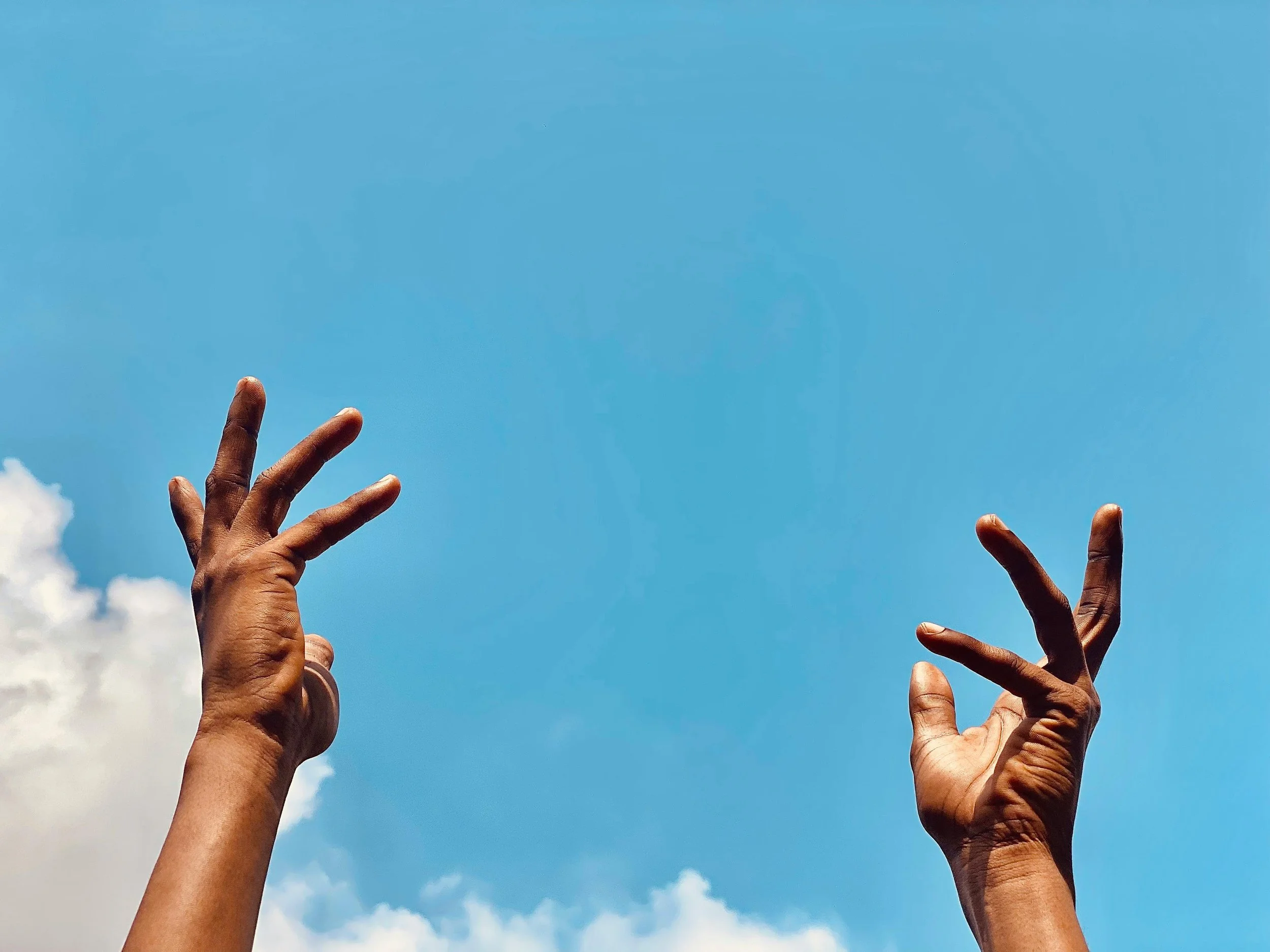
Photo by Kemi Taiwo
A simple truth. (I hope it is truth and simple)
Migration is rarely a casual decision. People leave their homes for many reasons:
Because violence has made life unsafe.
Because political instability has taken away hope.
Because economic hardship has made it impossible to provide for their children.
Because environmental disasters have reshaped entire communities.
Because persecution has made remaining where they are no longer possible.
For many families, migration is not primarily about opportunity. It is about survival.
And when people arrive seeking safety, the question before every community becomes very simple:
How will we respond?
With fear?
Or with hospitality?
For people of faith, these questions are not new. Our traditions have been asking - and answering - that question for centuries.
My prayer for all of us is that we approach it with passion, speaking with clarity and courage, and trusting that the Spirit of God is present whenever we act on behalf of one another and on behalf of those whose stories are not always heard in the halls of power.
When immigration is discussed in public life, we often hear the language of politics and policy: Borders. Enforcement. Systems. Applications. Budgets.
While those conversations matter, for communities of faith, immigration is not only a political issue. It is a moral question and an ethical mandate.
Who is our neighbor?
What does dignity look like in practice?
What kind of community are we called to build together?
Across religious traditions, we hear a shared moral and even theological teaching:
The stranger must not be rejected.
The vulnerable must not be abandoned.
Human dignity must be protected.
Sacred Mandates to Welcome the Stranger
In Jewish scripture, the command to welcome the stranger appears again and again.
In the Book of Exodus (22.20[21]) we read:
You shall not wrong or oppress a stranger, for you were strangers in the land of Egypt.
And in Leviticus (19.34), the command becomes clearer:
The strangers who reside with you shall be to you as your citizens; you shall love each one as yourself…
This command is repeated often as a constant reminder to the people of Israel of their own story:
They were once strangers.
Their ancestors migrated, wandered, and sought refuge.
One of the earliest confessions of faith in the Hebrew scriptures begins with a striking phrase:
A wandering Aramean was my father…
Deuteronomy 26.5
Migration is not outside the story of faith. Migration is part of the story of faith.
In the Christian scriptures, Jesus echoes and deepens this teaching. In the Gospel of Matthew (25.35) he tells his followers:
I was a stranger and you welcomed me.
And then he explains ( what that means:
…just as you did it to one of the least of these…you did it to me.
For Christians, welcoming the stranger is not optional.
This moral vision is not limited to Christianity or Judaism. Across the world’s religious traditions, we hear similar teachings.
In Islam, the Qur’an (4.36) encourages believers:
Worship Allah and associate none with Him. And be kind to… the poor, near and distant neighbours… [and] travellers… Surely Allah does not like whoever is arrogant, boastful.
In the Hindu tradition, we hear a powerful phrase:
The guest is (like) God.
In Sikhism, the practice of langar - the shared meal open to all - embodies the belief that every person deserves welcome and dignity.
In Buddhism, compassion calls believers to the relief of suffering wherever it appears - including the suffering of displacement.
Different traditions.
Different languages.
Different histories.
Yet a shared moral teaching and ethical mandate:
The stranger must be treated with dignity.
And faith communities should stand at the forefront of welcoming immigrants.
Immigration Is a Human Story
As a pastor, I have learned that immigration is never just an abstract debate. It is always about families.
About children. About people trying to live with dignity. When immigration debates happen in public life, human stories can disappear behind statistics. But migration is rarely a casual choice. People leave their homes,
because of violence
Because of political instability
Because of economic hardship
Because of environmental crisis
Because of persecution
For many families, migration is not primarily about opportunity. It is about survival.
And the question remains, how will people of faith and communities respond?
Let me share a story:
In July of 2023, Schenectady County received around 80 families - more than 230 individuals - who were temporarily housed in a motel in Rotterdam. Among them were about 100 children. Nearly 70 of those children prepared to enroll in the local public schools for the fall semester within a few weeks.
They came from Venezuela, Haiti, China, and Peru.
Different languages.
Different cultures.
An entirely unfamiliar place.
And what happened next tells an important story.
Teachers prepared classrooms.
Neighbors organized clothing drives, collected supplies, and distributed them among the families.
Community organizations stepped forward to help families navigate healthcare, transportation, food access, and language barriers.
It is worth noting that DocGo, the private contractor hired by the City of New York, with a contract worth over $400 million in public funds, to work with these and thousands of other asylum-seekers that they displaced throughout the state, often struggled to provide consistent support, to put it mildly.
But neighbors did not struggle, nor did they miss a step. The community came forward. What began as a moment of tension became a moment of solidarity.
When communities encounter immigrants not as political abstractions but as families, as children, as fellow human beings, compassion becomes possible. But it needs to be said: Compassion, ultimately, is a decision.
From Compassion to Policy
Story after story in holy scriptures of multiple traditions tell of leaders who not only spoke about personal kindness. They also challenged unjust systems. The Jewish prophet Micah (6.8) asks a question that still echoes today:
He has told you, O mortal, what is good, and what does the Lord require of you but to do justice and to love kindness and to walk humbly with your God
Justice requires structures that protect dignity. Fairness requires laws that reflect compassion.
Public policy not only shapes laws. It shapes the kind of community we become.
Several pieces of legislation being considered in New York State seek to move us closer to that vision. Some aim to ensure that people can access schools, courts, and houses of worship without fear of immigration enforcement. Others would guarantee legal representation for low-income immigrants facing deportation proceedings - so that fairness and due process are not privileges reserved only for those who can afford them. Still others strengthen protections so immigrant families can access services and participate in community life without intimidation. Legislation like the New York for All Act seeks to ensure that immigrants can interact with schools, hospitals, community institutions, and public safety officers without fear that doing so could lead to detention or deportation.
None of these laws pass automatically. They require voices. They require people willing to embody dignity, fairness, and righteousness. People of faith, and the communities they are a part of, have a particular role in that work. Not because we seek political power. But because we are living up to our shared ethical responsibility. Advocacy rooted in faith is not partisan. It is faithfulness. It is a witness.
The Call Before Us
If our traditions teach us to welcome the stranger…
then our public life must reflect that teaching.
If we believe every human being bears dignity…
then our laws must protect that dignity.
If we believe compassion is stronger than fear…
then our policies must embody that conviction.
Faith has always called people beyond comfort and into solidarity. Solidarity means recognizing that the well-being of one person is connected to the well-being of everyone. Solidarity means standing together - across traditions, languages, and cultures - to build communities where everyone can live with dignity.
Advocacy is one way we live our faith in public. It is the practice of turning compassion into solidarity, and solidarity into community. For in the end, the question before us is not only about immigration policy. The question before us is about who we are. Will we be a people defined by fear or a people defined by welcome?
Our traditions answer that question clearly. Again and again they invite us to welcome the stranger, to defend human dignity, and to walk together in solidarity - building community.